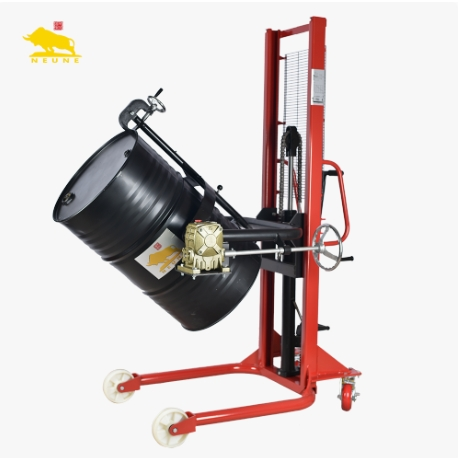
Unlike standard pallets, drums can vary by industry, region, and material. Steel drums, plastic drums, fiber drums, and chemical barrels may have different rims, wall thicknesses, and surface textures. If buyers only confirm rated capacity but ignore drum size range, clamp structure, and lifting method, unexpected compatibility problems can appear after delivery.
Why Drum Size Compatibility Is More Complicated Than It Looks
Many buyers assume that one drum lifter trolley can handle most standard barrels. In real use, this is not always true. Some drums have strong rims that are easy to clamp. Others have smooth sides, weak rims, or slightly different diameters. A small size difference can affect whether the clamp holds securely during lifting.
If the clamp is too loose, the drum may slip. If it is too tight, it may damage the drum surface. If the lifting height does not match the required operation, workers may not be able to load or unload drums efficiently.
For importers, these issues often become visible only after customers test the equipment with their own barrels.
Safety Risks Caused By Poor Fit
Drum handling usually involves liquids, powders, chemicals, oils, or other industrial materials. When the clamp does not hold properly, the risk is not limited to equipment failure. It may lead to spills, product loss, floor contamination, worker injury, and costly cleanup.
For chemical and food processing facilities, drum handling safety is especially important. A drum lift truck must hold the barrel securely while lifting, moving, rotating, or positioning. Buyers should not treat compatibility as a secondary detail.
What Buyers Should Confirm Before Ordering
Before confirming a drum lift truck order, buyers should ask end customers for actual drum specifications. Important information includes drum diameter, drum height, total weight when full, material type, rim design, and whether the drum needs lifting only or lifting and pouring.
If the buyer serves multiple industries, it may be better to select a model with a wider compatibility range or adjustable clamping structure. For bulk orders, confirming these details early can reduce after-sales disputes.
Inspection And Testing Suggestions
A practical drum lift truck evaluation should include:
- Clamp opening range
- Drum diameter compatibility
- Maximum lifting capacity
- Stability during movement
- Wheel performance under load
- Hydraulic lifting smoothness
- Frame welding strength
- Handle operation comfort
- Drum slip resistance
- Packaging protection for export
When possible, buyers should test the equipment with real drums from the target market. This is more reliable than testing with only one standard sample barrel.
How Compatibility Problems Affect Importers
When drum size issues appear after delivery, importers may face difficult conversations with distributors or end users. Returning large material handling equipment can be expensive. Replacement parts may not solve the issue if the core clamp structure is unsuitable.
In some cases, the equipment may sit unused in the warehouse because it cannot match the customer’s actual drums. This creates inventory pressure and reduces buyer confidence in future orders.
Choosing Equipment Based On Real Application
A drum lift truck should be selected based on actual working conditions, not only catalog capacity. Buyers should consider whether the product will be used in chemical plants, warehouses, food factories, printing workshops, or oil storage areas. Each application may require different wheel materials, clamp designs, lifting heights, and surface treatments.
Request A Quote For Drum Lift Truck Orders
For drum lift truck bulk orders, drum lifter trolley supply, or warehouse handling equipment projects, you can send us your drum diameter, drum height, maximum load, drum material, lifting height requirement, usage environment, order quantity, and destination market.
Our team can help review the compatibility range, clamp structure, lifting stability, and packing method before quotation. If your customers handle chemical barrels, plastic drums, steel drums, or mixed drum sizes, please share these details so we can recommend a more suitable option.
For drum handling equipment quotation support, sample discussion, or wholesale supply, visit https://www.gdniulilogistics.com/products.html and send us your project requirements.